Wat Pho history in short
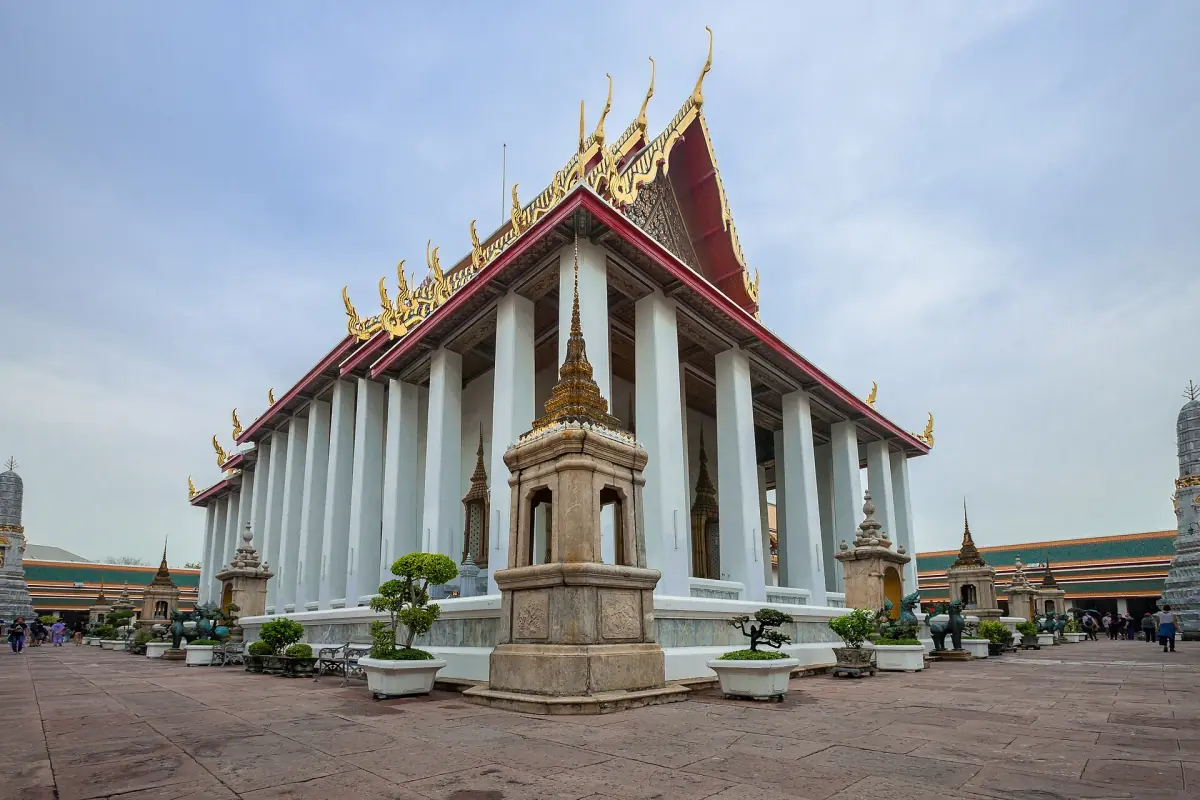
Wat Pho (Wat Phra Chetuphon Wimon Mangkhalaram Rajwaramahawihan) began as a temple called Wat Phodharam in the Ayutthaya period, before Bangkok became the capital. The exact founding year is not known. Rama I ordered a restoration in 1788 or 1789 and the temple was celebrated and renamed in 1801. Rama III began the great expansion in 1832.
Most of what you see today comes from those two reigns. If you would rather hear the story on site, a guided visit adds context to the halls and figures. See the Wat Pho guided tours for options.
Timeline of Wat Pho
From the Ayutthaya period to the present.
| Period | What happened |
|---|---|
| Ayutthaya period | A temple called Wat Phodharam stands on the site. The exact year of founding is unknown. |
| 1788 or 1789 | Rama I orders the restoration of the temple. |
| 1801 | The restored temple is celebrated and renamed. |
| 1832 | Rama III begins the great expansion. |
| 1831 to 1841 | Thai stone inscriptions on religious and secular subjects are made. |
| 2011 | The inscriptions are registered in the UNESCO Memory of the World Register. |
| 2019 | UNESCO lists Nuad Thai, traditional Thai massage, as intangible cultural heritage. |
| 2025 | The Reclining Buddha is examined after the Myanmar earthquake and a restoration plan is ordered. |
For most visitors, the useful point is the sequence: a restoration under Rama I, then a much larger rebuilding under Rama III.
Our pick: a private day with time for the stories
A private driver-guide leaves time for the history behind each temple.
Hand-picked tours, booked through GetYourGuide. Prices are indicative starting prices in US dollars (as of October 2026). Tap a tour for live availability and the current price in your currency.
Wat Pho tours with history and context
Guided visits to Wat Pho, the Grand Palace and Bangkok's old town, with live prices and availability.
Rama I and the restoration
Rama I restored the old Wat Phodharam. The ordination hall, the Phra Ubosot, dates to his time and was extended under Rama III. Its main Buddha image holds the ashes of Rama I beneath the pedestal. The mother-of-pearl door panels show scenes from the Ramakien.
The grounds are divided by Chetuphon Road. The northern side is the visitor area. The southern side is the living quarter of the monks. Wat Pho is still an active monastery, so the history here is also a living tradition. For the sights themselves, see the highlights page.
Rama III, the great chedis and the stone inscriptions
The expansion that gave the temple its present size.
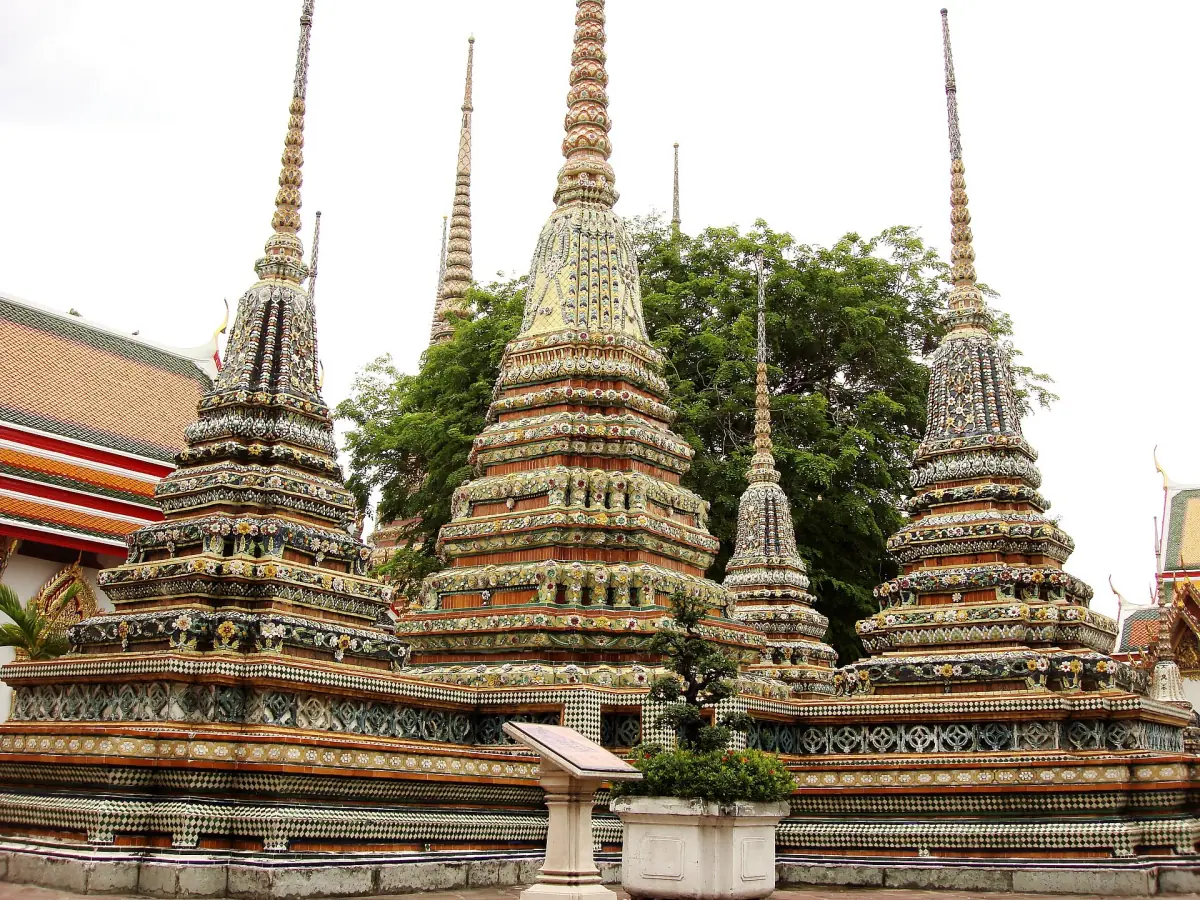
The four great chedis
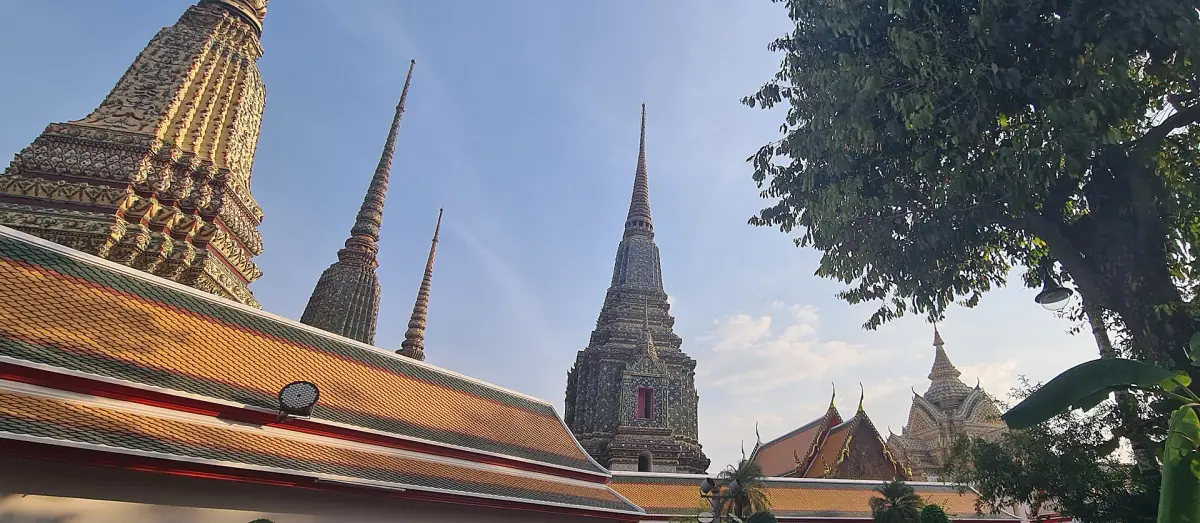
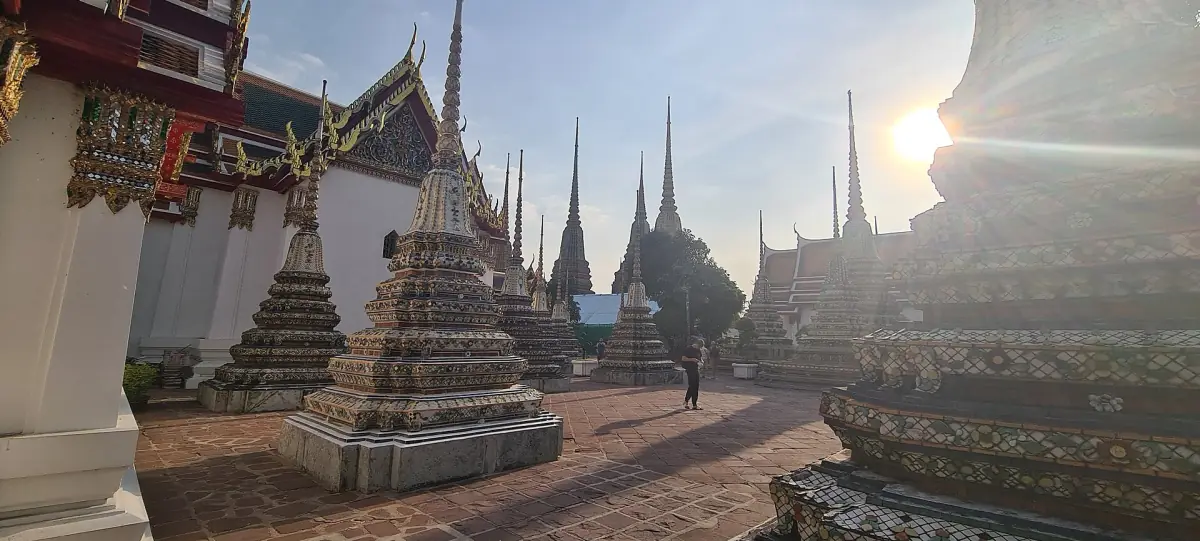
The Phra Maha Chedi Si Rajakarn has four great chedis, each 42 m high. Green stands for Rama I and white for Rama II, built by Rama III. Yellow stands for Rama III and dark blue for Rama IV. It does not mean that each king built his own.
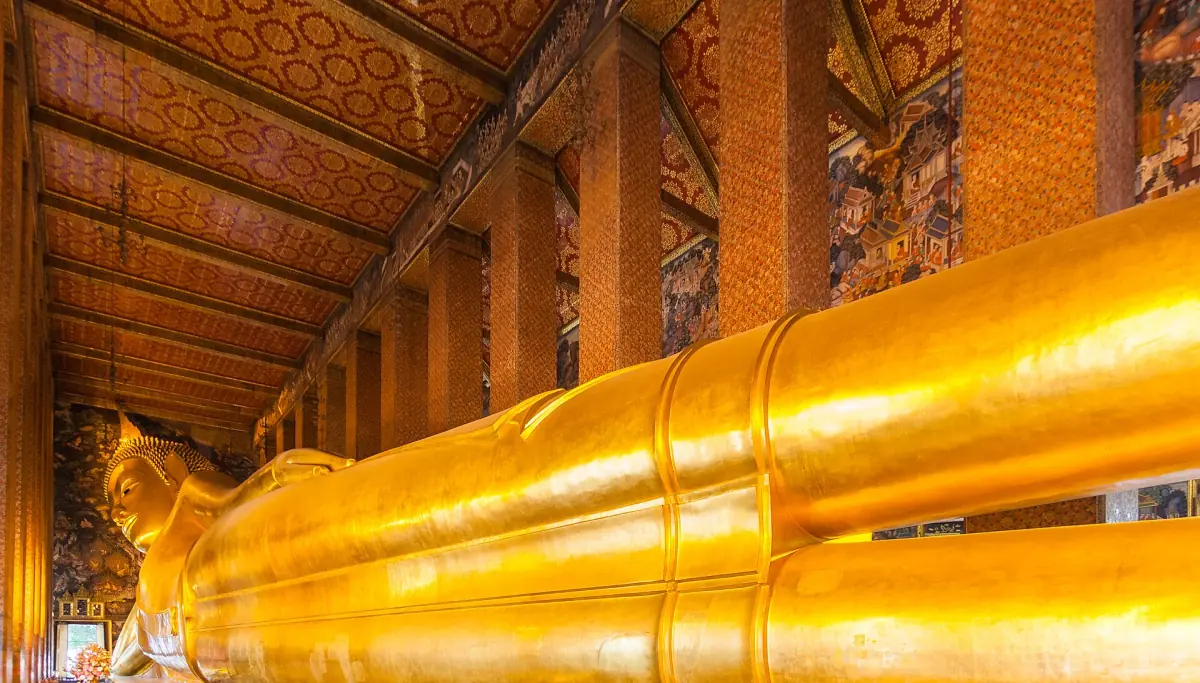
Highlights →The Reclining Buddha
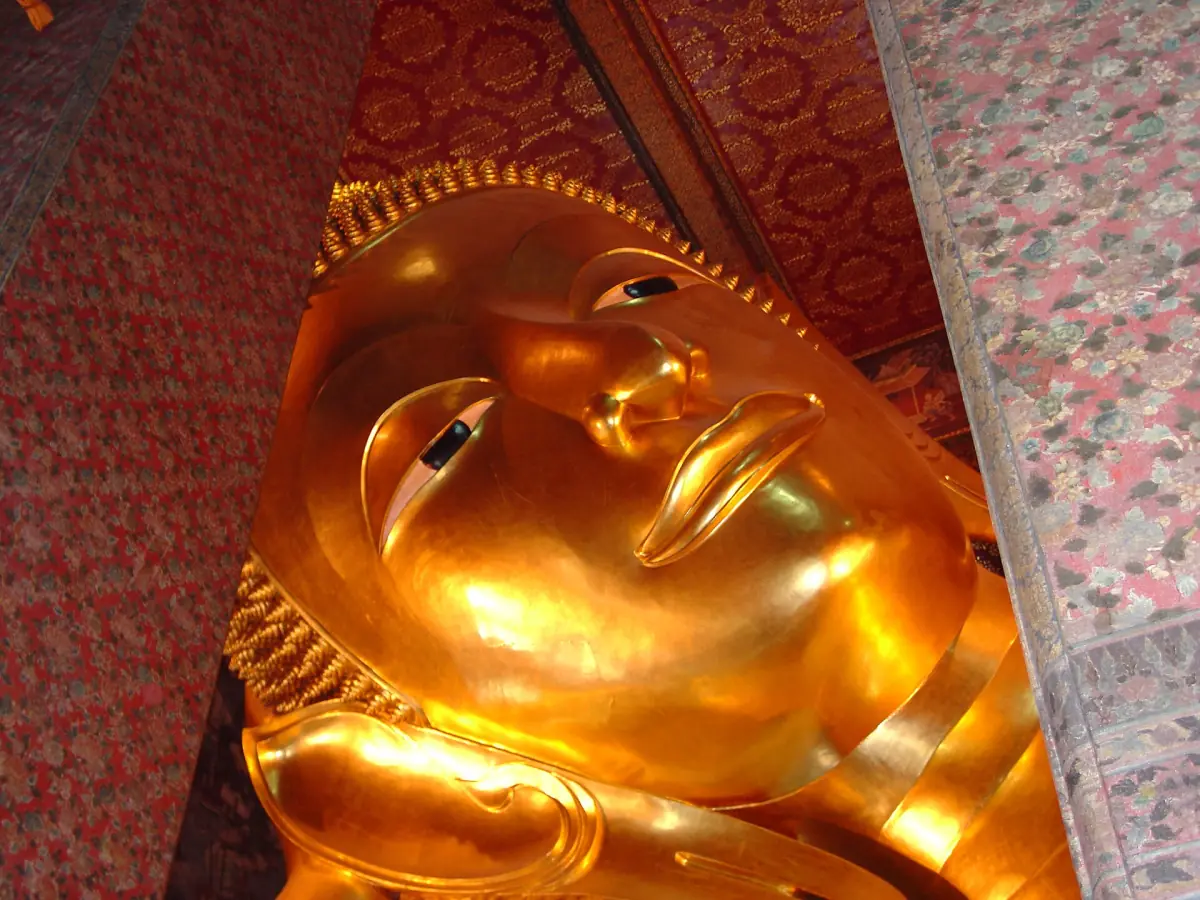
The image is 46 m long and 15 m high, made of brick and stucco, lacquered and gilded. It is not solid gold. The hall measures 60.75 by 22.60 m, which is the hall and not the statue.
Reclining Buddha →The stone inscriptions
UNESCO describes 1,431 Thai stone inscriptions from 1831 to 1841. They cover religious and secular subjects, and Rama III and scholars preserved them for public education.
The Chinese stone figures
Gate guardians, scholars, soldiers and animals came as ballast on trading ships from China. They were later used as decoration around the grounds.
The hermit figures
The rock garden has figures of hermits in stretching poses. There were originally 80, and 24 remain. They show poses and do not offer a health claim.
The first university of Thailand
Wat Pho is often called the first university of Thailand. This is a title for its role in teaching the public, through the inscriptions. It does not mean a university in the modern sense, and it was not founded as one.
The same tradition connects to Thai massage today. UNESCO lists Nuad Thai, the practice, since 2019. That listing covers the tradition and not any single massage business. See the Thai massage page for rates and hours on site.
The Reclining Buddha today
After the Myanmar earthquake, the Reclining Buddha was examined on 29 March 2025. Existing cracks and surface damage were found, and no new damage from the quake. A restoration plan was ordered. Check the current state of the hall before you go. For the neighbouring temple on the other bank, read the history of Wat Arun.
Wat Pho history: frequently asked questions
When was Wat Pho built?
It began as Wat Phodharam in the Ayutthaya period, and the exact year is not known. Rama I restored it from 1788 or 1789, and it was celebrated and renamed in 1801.
Who built the four great chedis?
They are linked to four kings. Green is for Rama I, white for Rama II, yellow for Rama III and dark blue for Rama IV. Rama III built the white one for Rama II.
What are the stone inscriptions?
There are 1,431 Thai stone inscriptions from 1831 to 1841, on religious and secular subjects. UNESCO registered them in 2011.
Is Wat Pho a UNESCO World Heritage Site?
No. The inscriptions are in the UNESCO Memory of the World Register, and Nuad Thai is on the list of intangible cultural heritage. The temple itself is not a World Heritage Site.
Why is it called the first university of Thailand?
It is a title for the public teaching of religious and secular knowledge through the inscriptions. It is not a modern university.