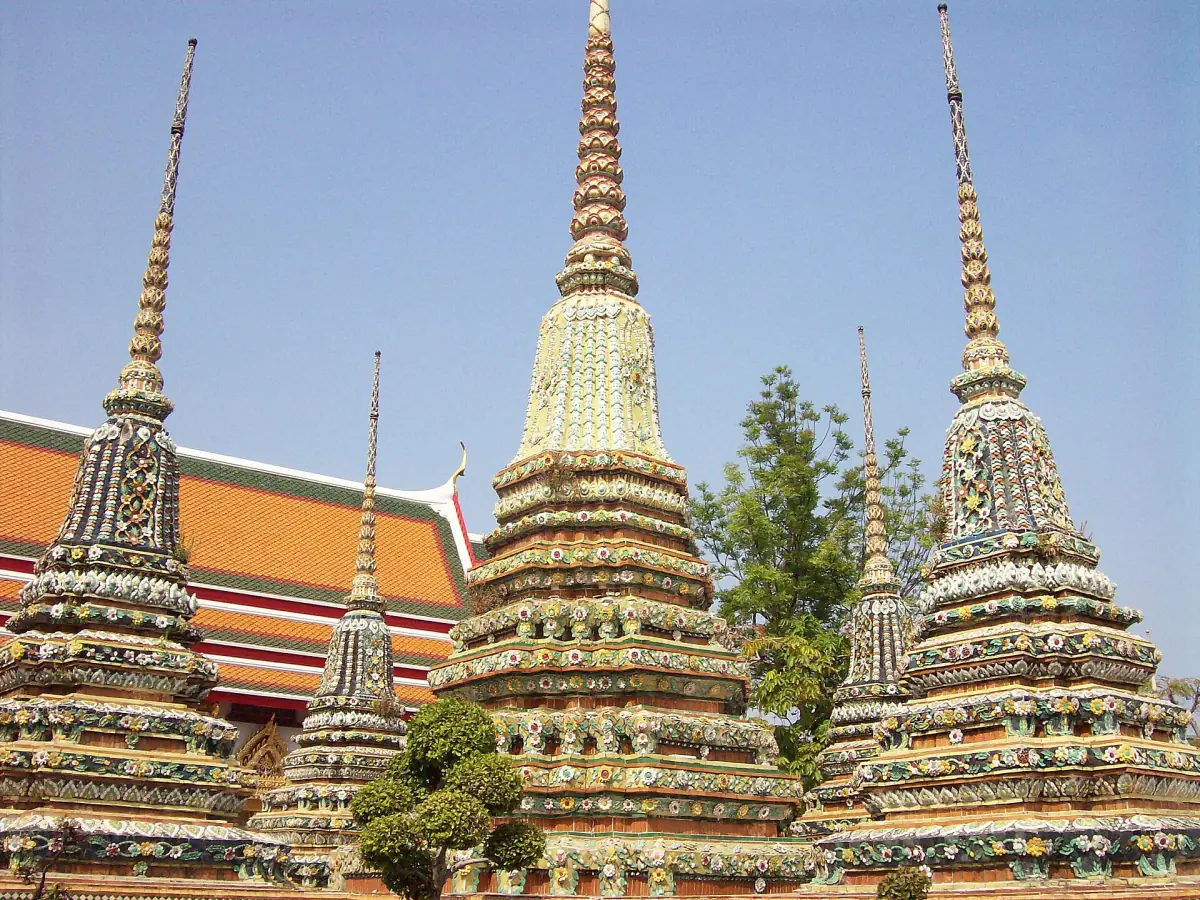
What to see at Wat Pho
Wat Pho is an active monastery with a large compound. Chetuphon Road runs through it. The northern part is the visitor area, and the southern part is where the monks live. Most of what you came for is in the north.
The Reclining Buddha has its own page. This page covers everything else: the courtyard of the great chedis, the ordination hall, the cloisters, the stone inscriptions and the figures that stand around the courtyards. A guide helps to read the details, and the Wat Pho tours show what is on offer.
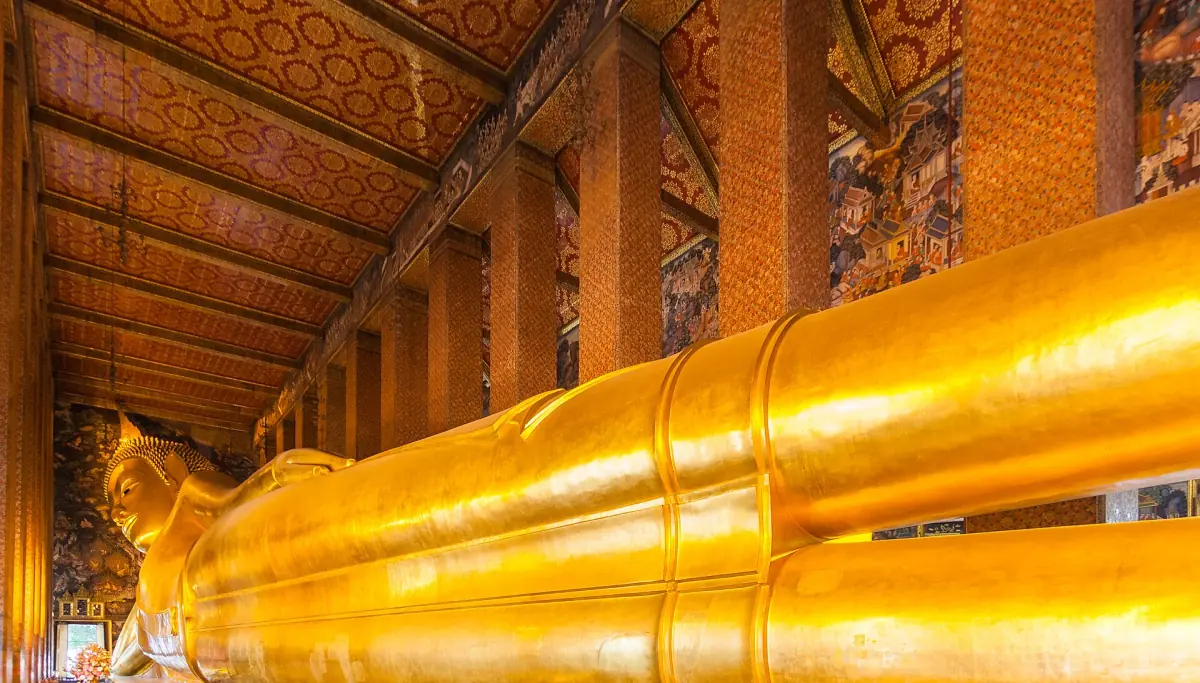
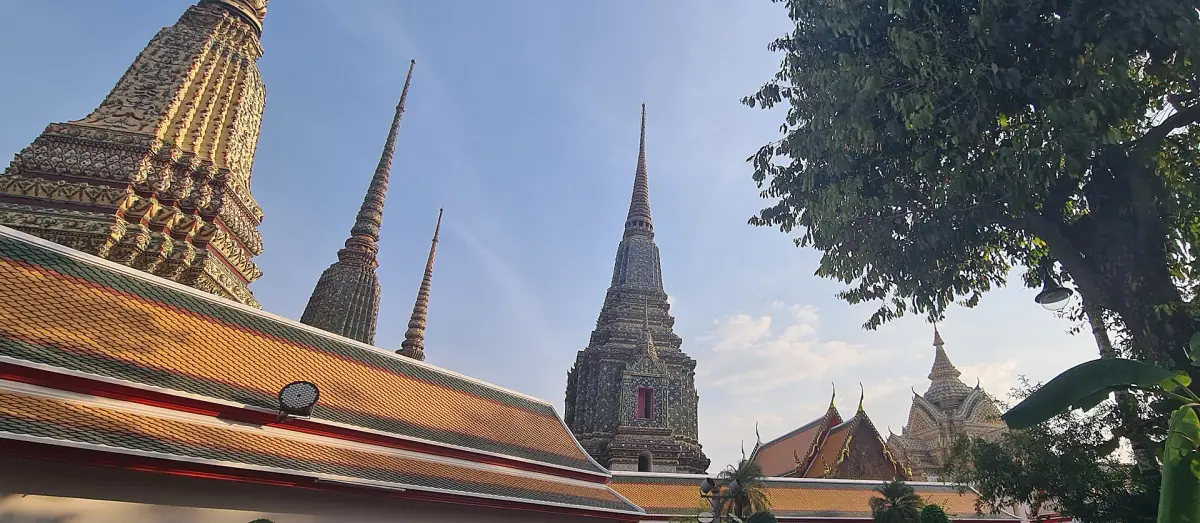
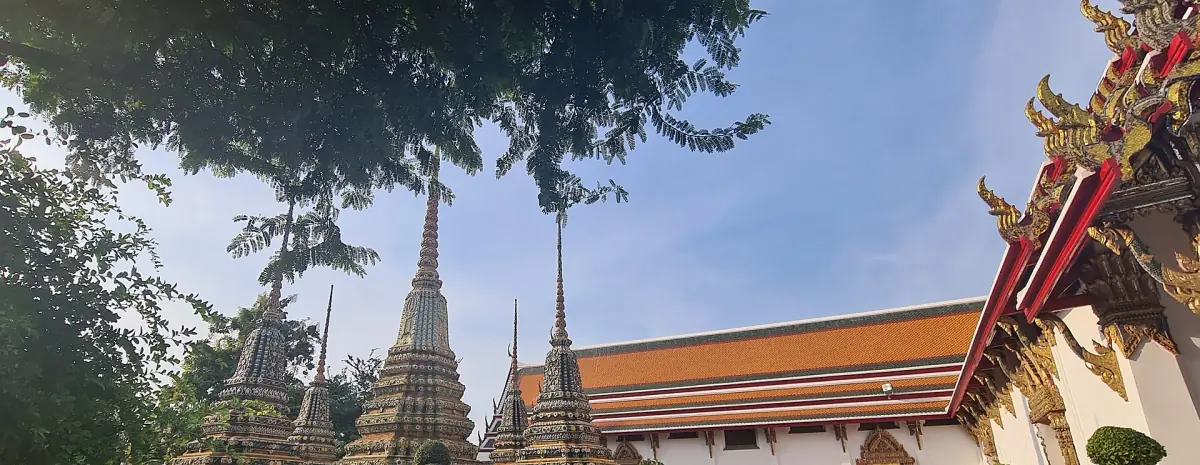
The four great chedis
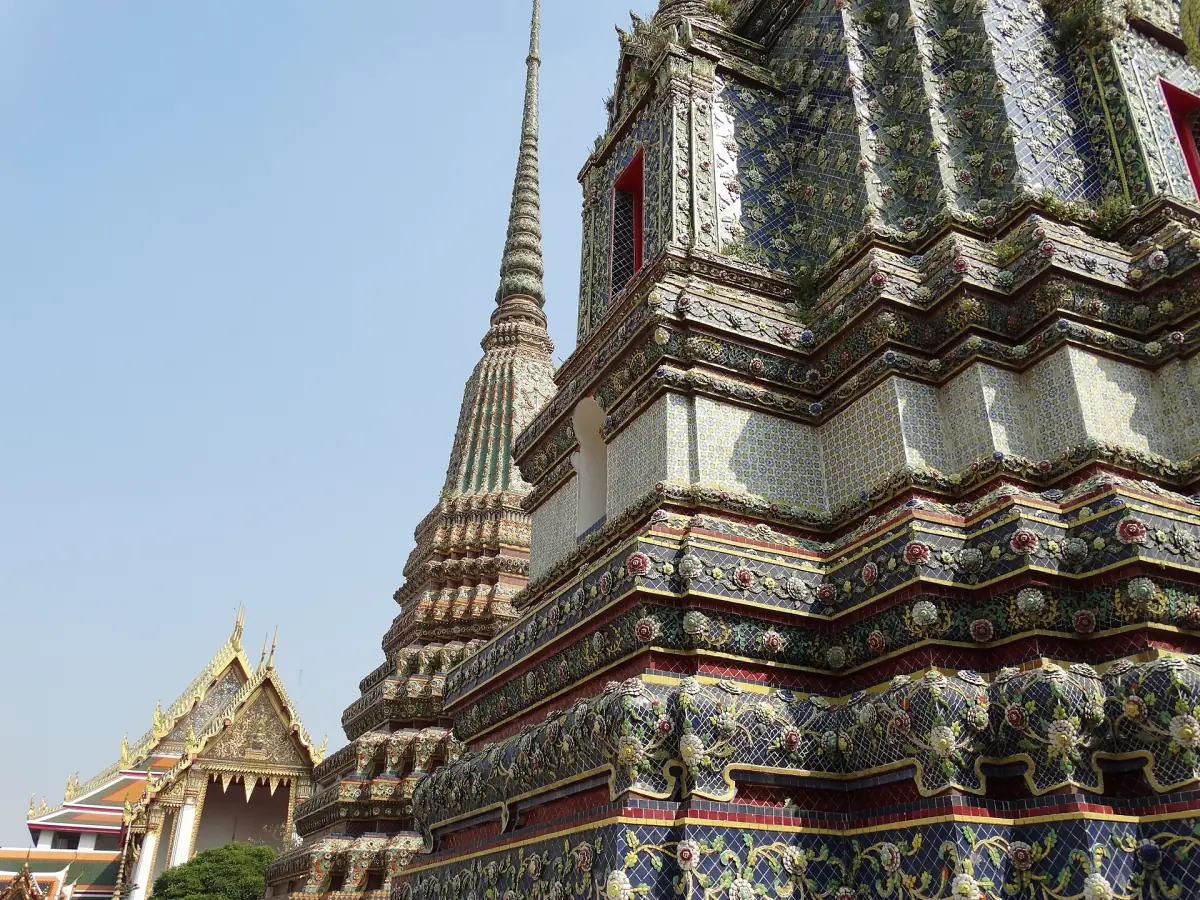
The Phra Maha Chedi Si Rajakarn is a group of four large chedis, each about 42 m high. They stand together in the northern part of the compound. Each one is tied to a king of the Chakri dynasty and has its own colour.
| Colour | Linked to | Note |
|---|---|---|
| Green | Rama I | – |
| White | Rama II | Built under Rama III |
| Yellow | Rama III | – |
| Dark blue | Rama IV | – |
The link to a king does not mean that king built the chedi himself. For most first-time visitors, the easy order is the chedi courtyard first, then the ordination hall, then the Reclining Buddha.
Our pick: the temple grounds with a guide
A guide shows you the chedis and cloisters that most visitors walk past.
Hand-picked tours, booked through GetYourGuide. Prices are indicative starting prices in US dollars (as of October 2026). Tap a tour for live availability and the current price in your currency.
Wat Pho tours in Bangkok
Guided visits to Wat Pho, alone or combined with the Grand Palace, with live prices and availability.
The Phra Ubosot
The Phra Ubosot is the ordination hall and ritual hall of the temple. It dates from the time of Rama I and was extended under Rama III. The main image is the Phra Buddha Theva Patimakorn, and the ashes of Rama I lie under its base.
Look at the door panels. The mother-of-pearl inlay shows scenes from the Ramakien, the Thai version of the Ramayana. The doors are worth a slow look before you step inside.
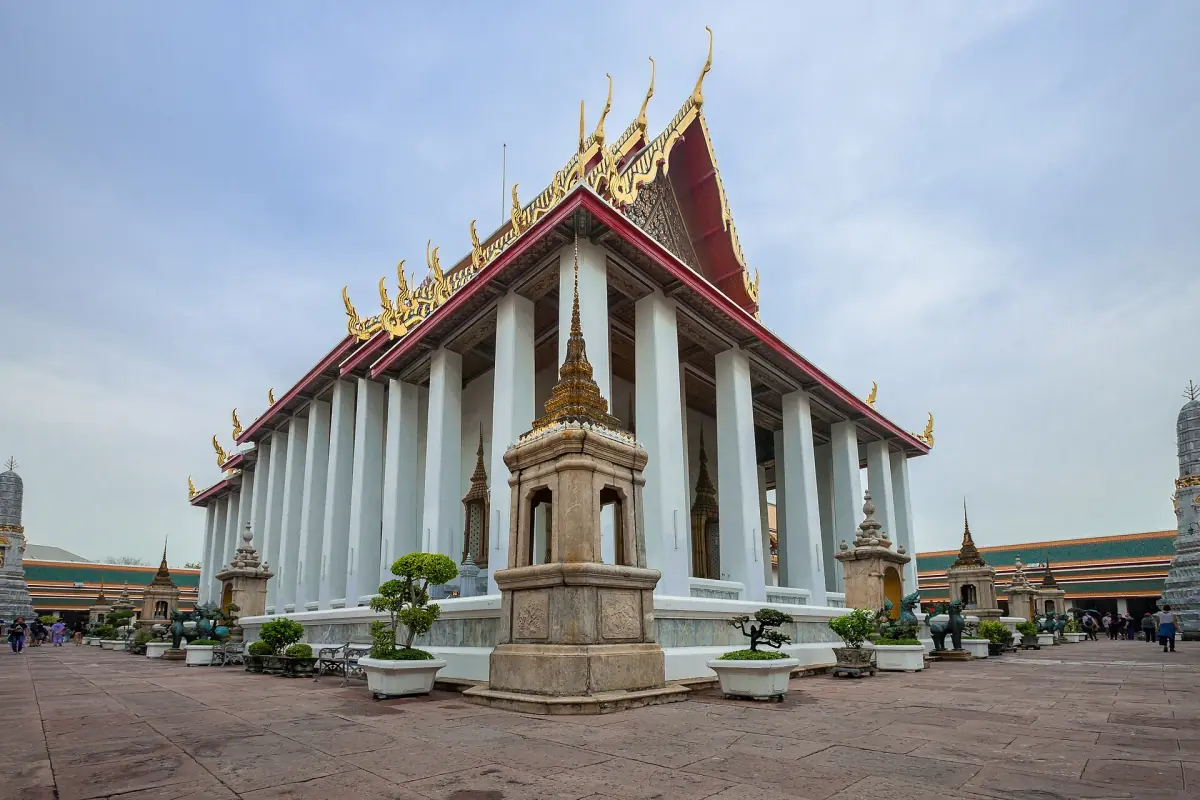
The cloisters
The cloister, called Phra Rabieng, runs around the ordination hall, with small chedis along its wall. It counts as a building of its own. Across the whole compound there are more than 1,000 Buddha images, many of them in galleries like this one.
Keep to the walkways and leave the Buddha images alone. Do not climb on them.
Inscriptions, guardians and hermits
Details that many visitors walk past.
The stone inscriptions
The compound holds 1,431 stone inscriptions in Thai, made between 1831 and 1841. They cover religious and everyday subjects, and Rama III and scholars of the time kept them for public education. UNESCO added them to its Memory of the World register in 2011.
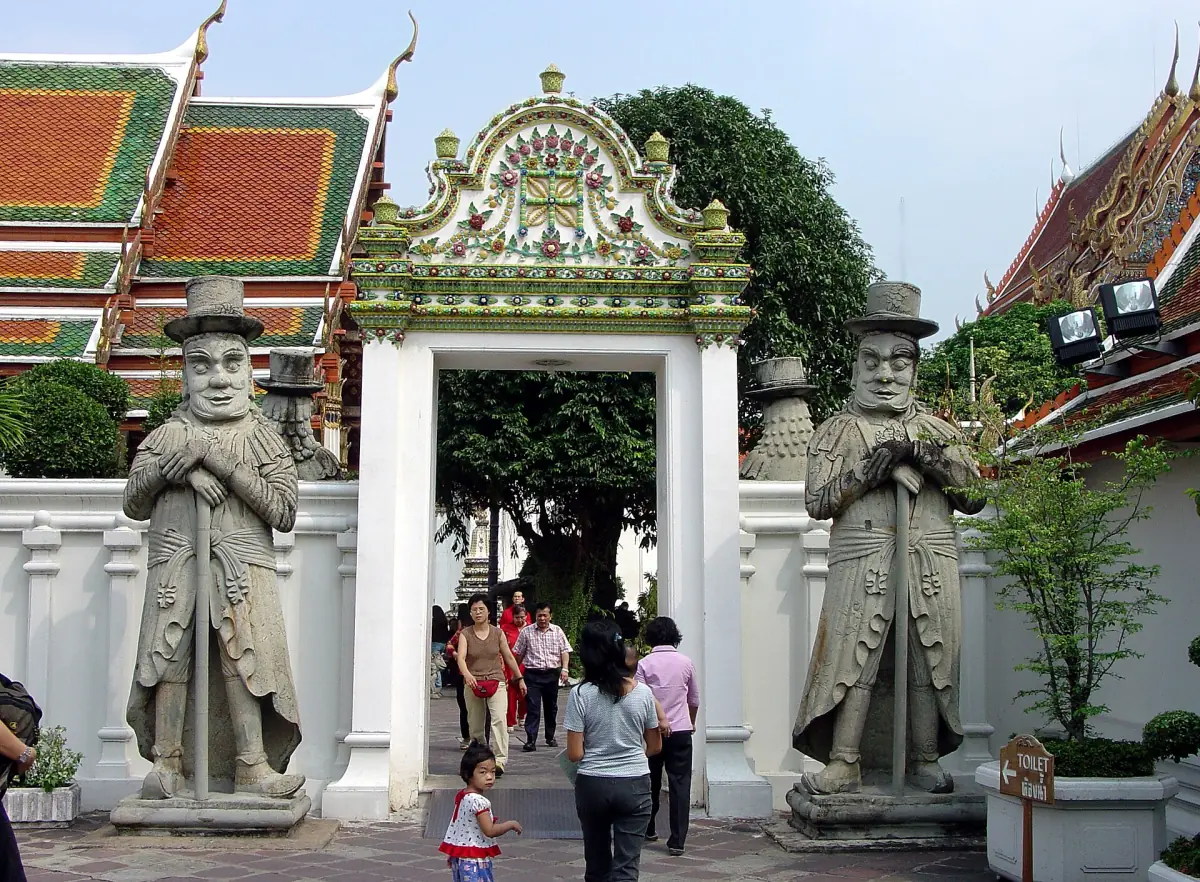
Chinese stone figures
The courtyards hold gate guardians, scholars, soldiers and animals carved in stone. They came as ballast in ships from the China trade and were later used as decoration.
The coloured Yak guardians
The coloured Yak figures near the mondop form a separate group. Not every Chinese stone figure is one of them, so do not mix up the two.
The hermit figures
Figures of hermits in stretching poses stand on the rockery. Originally there were 80, and 24 remain. They show poses and do not promise any health effect.
A simple route through the grounds
An order that avoids walking back and forth.
1. Chedi courtyard
Start with the four great chedis, ideally early, before the courtyard fills up.
2. Ordination hall and cloister
Look at the doors, then walk the cloister. Shoes come off before the hall.
3. Reclining Buddha
Leave time for the full length of the hall, the feet and the bowls.
Reclining Buddha →4. Stone figures and inscriptions
Take the remaining courtyards slowly. This is the part most people rush.
The temple is open from 08:00 or 08:30 until 19:30, so check the current hours before you go. Early morning and late afternoon are usually calmer. Cover your shoulders and knees, as the dress code asks. After the temple, Wat Arun across the river is a short add-on.
More at Wat Pho
Other things to do in the compound.
Wat Pho highlights: frequently asked questions
What are the main sights at Wat Pho?
The Reclining Buddha, the four great chedis, the Phra Ubosot with its cloister, the stone inscriptions and the Chinese stone figures. The massage pavilion is also in the compound.
How high are the great chedis?
Each of the four chedis is about 42 m high. They are green, white, yellow and dark blue.
How many Buddha images does Wat Pho have?
There are more than 1,000 across the compound, in the halls, galleries and cloisters.
Are the stone inscriptions on the UNESCO list?
Yes, in a specific register. The 1,431 stone inscriptions were added to the Memory of the World register in 2011. The temple itself is not a World Heritage site.
Where do the Chinese stone figures come from?
They arrived as ballast in ships from the China trade and were later used to decorate the courtyards. They include gate guardians, scholars, soldiers and animals.
Is this the official Wat Pho website?
No. This is an independent travel guide. It is not connected to the temple or any authority.